Bari
City guide

What to see in Bari

Six places not to miss, most of them within walking distance of the apartment. Search by name or filter by interest.

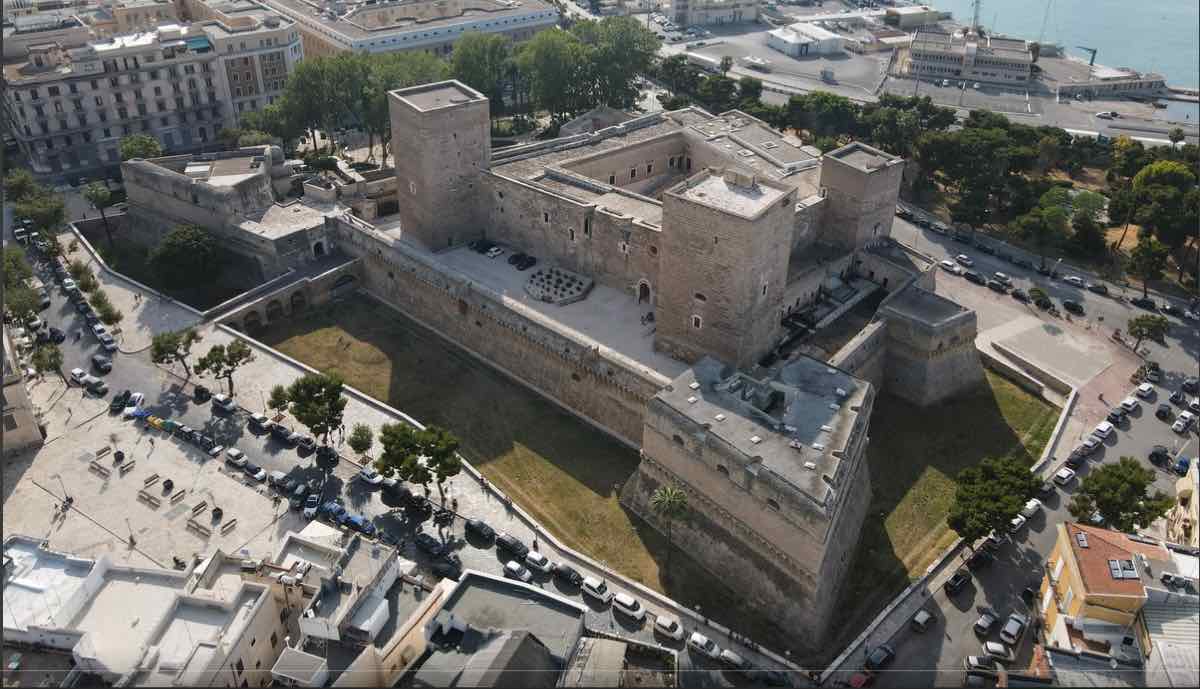
Norman-Swabian Castle
History

Norman-Swabian Castle

Standing between the old town and the sea, the Norman-Swabian Castle occupies a strategic position and seems to keep watch over the Apulian capital. Built by the Normans, destroyed and rebuilt by Frederick II, it was fortified in the 16th century with bastioned walls and a wide moat on three sides — the fourth was open to the sea.

In the 19th century it became a prison and later a barracks. Still today the castle watches over the old town and guards its main entrance, overlooking the sea. It houses the regional Superintendence for Architectural and Historical Heritage of Apulia.
Basilica of San Nicola
FaithHistory

Basilica of San Nicola

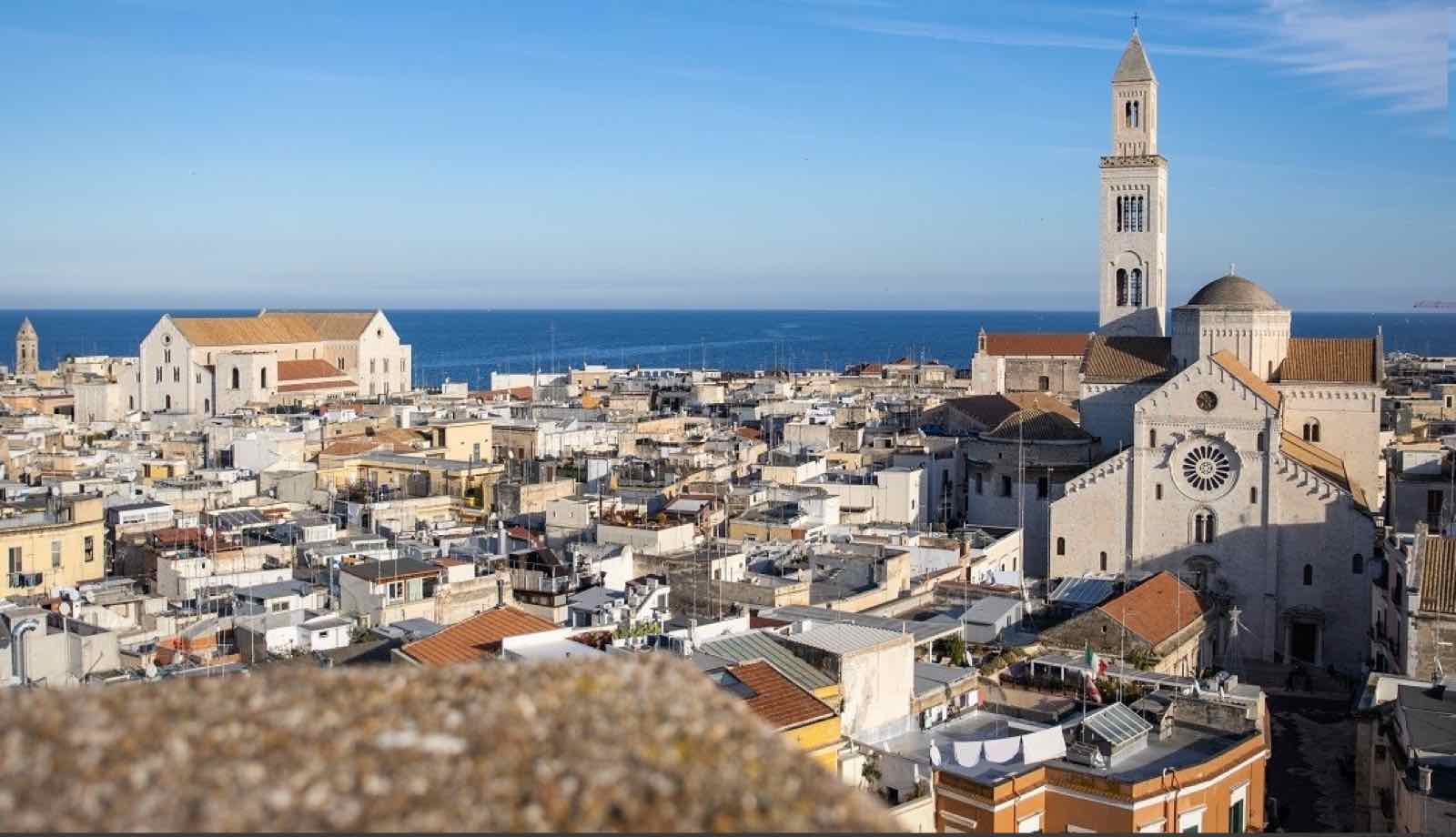
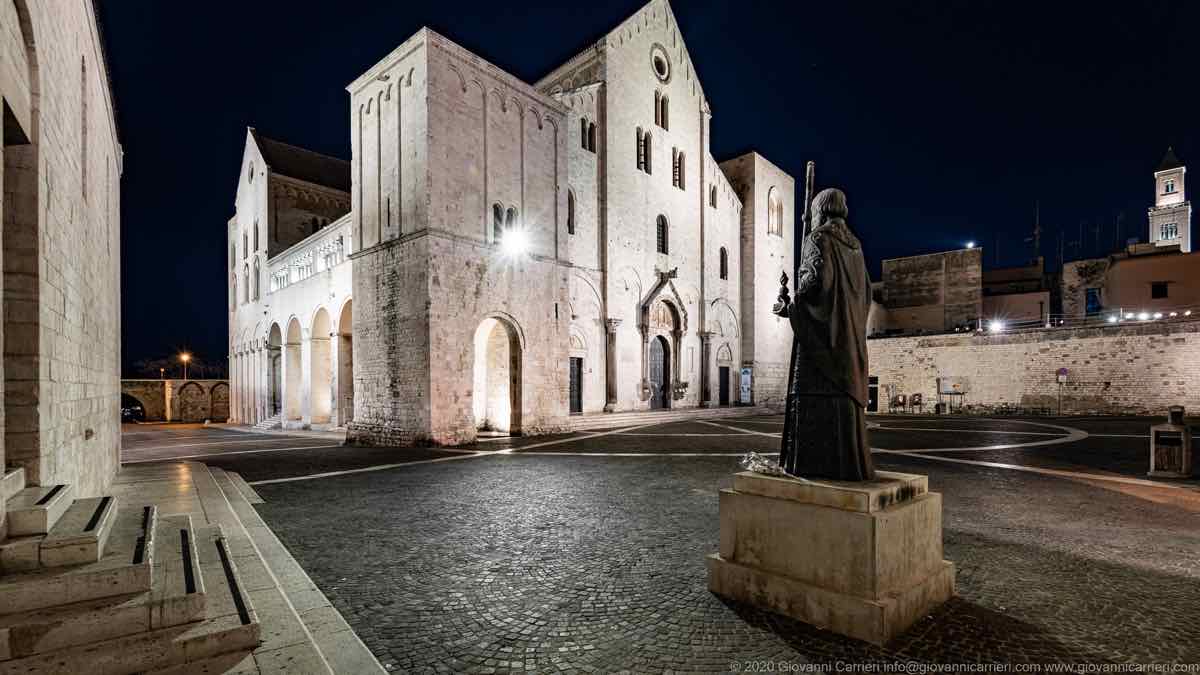
A place of deep spirituality for thousands of pilgrims from all over the world, the Basilica of San Nicola rises majestically in Bari's old town. Unmistakable for the sober, massive look typical of Norman architecture, it keeps the relics of Saint Nicholas, patron saint of Bari, in its crypt.

Built in 1089 precisely to house the Saint's remains, it is one of the most enchanting religious buildings in Italy and a destination for both Catholic and Russian Orthodox faithful — it is one of the few Italian churches where both rites are celebrated.

The church has a Romanesque façade; inside you can admire the gilded wooden ceilings, the silver altar, a marble canopy that is the oldest in Apulia, the Throne of Elijah and many 17th-century paintings. The Nicolaian Museum, next to the Basilica, holds the treasure of Saint Nicholas along with precious parchments, illuminated manuscripts and silverware.

Cathedral of San Sabino
FaithHistory

Cathedral of San Sabino

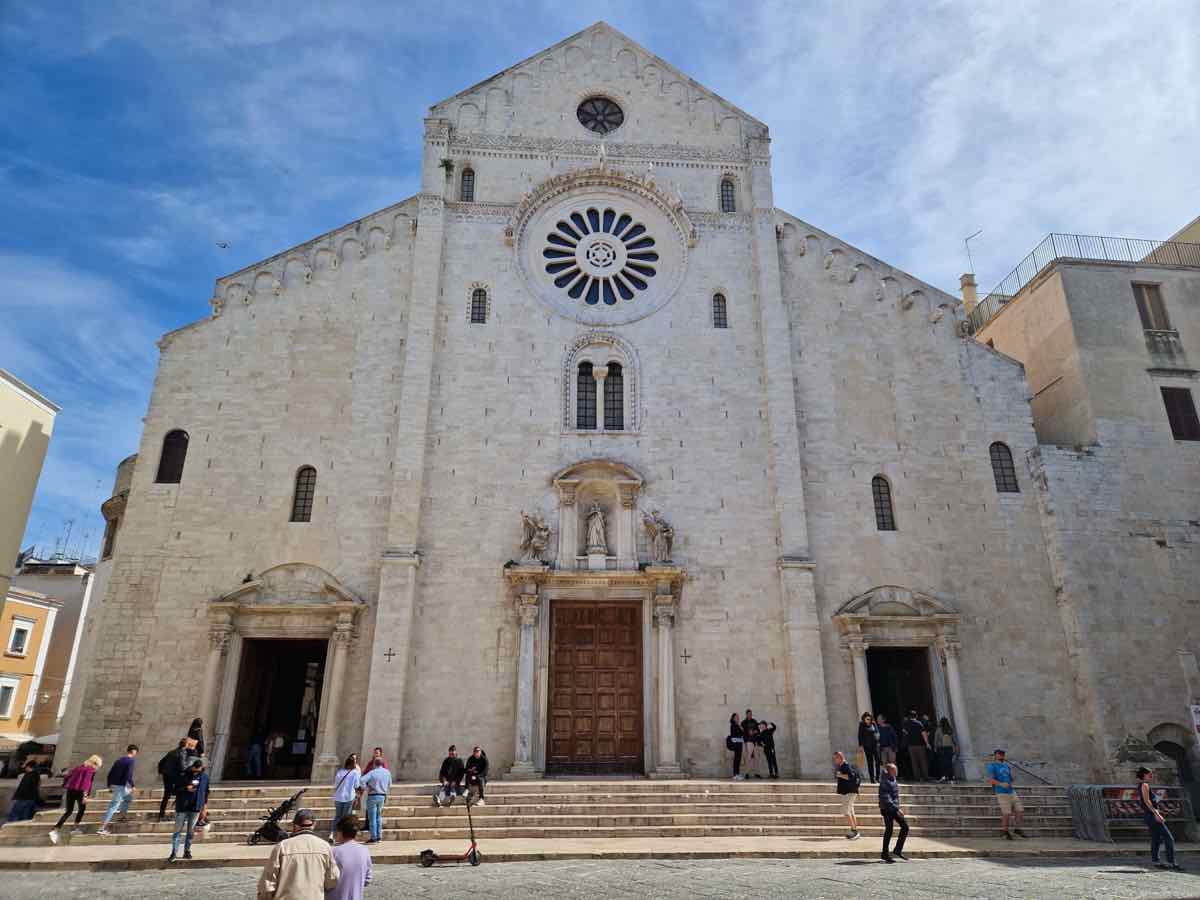
Built between the 12th and 13th centuries on the ruins of the Byzantine cathedral, the Cathedral of San Sabino is one of the finest examples of Apulian Romanesque architecture in Bari. Its limestone façade is decorated with small arches, pilasters and a carved rose window.

The three-aisled interior is decorated with simple elements carved in the bare limestone. Every 21 June, at the summer solstice, sunlight filtering through the 18 segments of the central rose window lights up the petals of the rose inlaid in the centre of the nave.

In the crypt beneath the transept you can admire the icon of the Virgin Hodegetria, and next to it lies the 'succorpo', a space decorated with frescoes and mosaics.

The old town
HistoryWalksLocal food

The old town

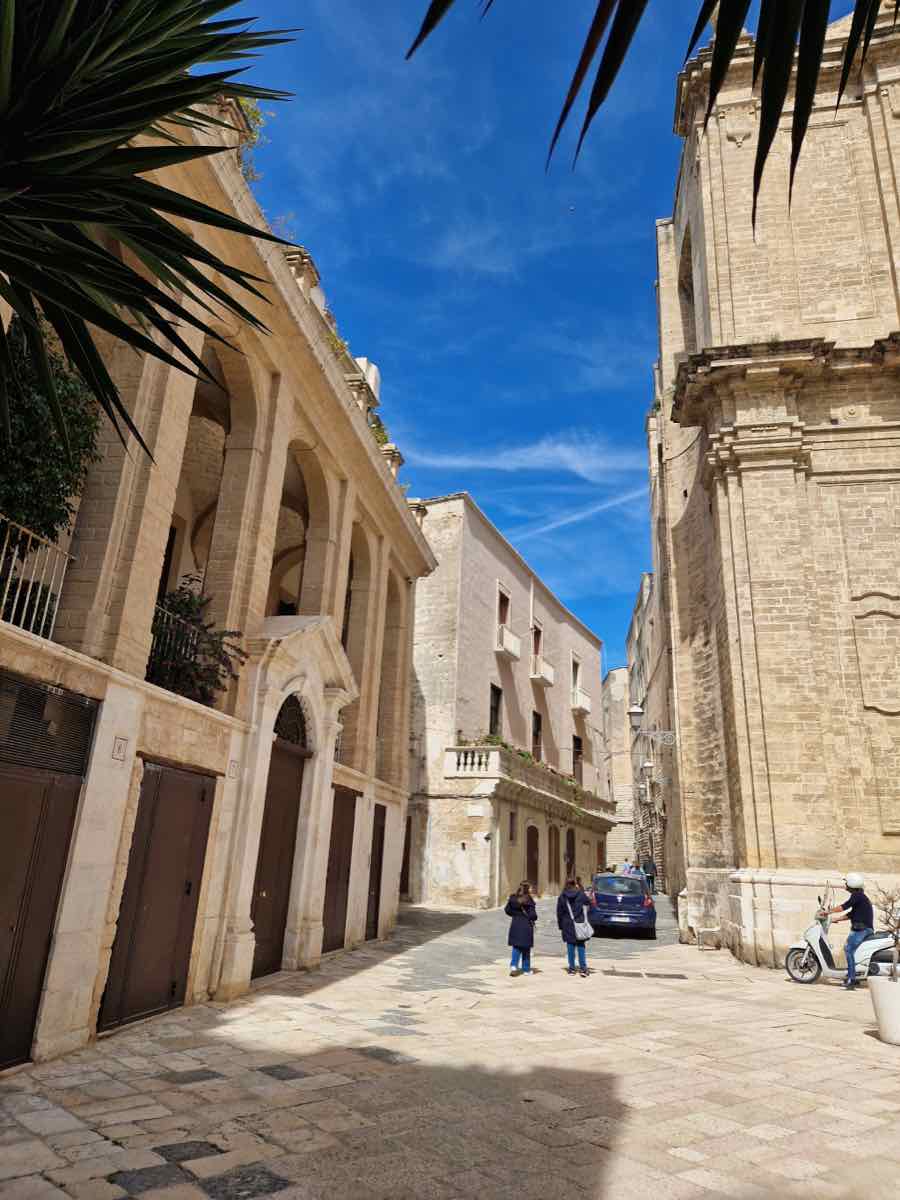
Bari Vecchia is the district of San Nicola, lying between the old and the new harbour. Its core dates back to the Middle Ages and is enclosed by walls with four bastions. Inside, a maze of alleys and lanes preserves the folklore, traditions and customs of the past, making it truly fascinating.

Via Arcobasso is the most characteristic alley of Bari Vecchia: every day local women make fresh pasta such as orecchiette, fusilli, 'cappelli del prete' and cavatelli, kneaded from durum wheat semolina and water.

In the evening Bari Vecchia is also the heart of the city's nightlife, where young people and families meet to stroll and soak up the atmosphere of the district.

Nazario Sauro seafront
SeasideWalks

Nazario Sauro seafront

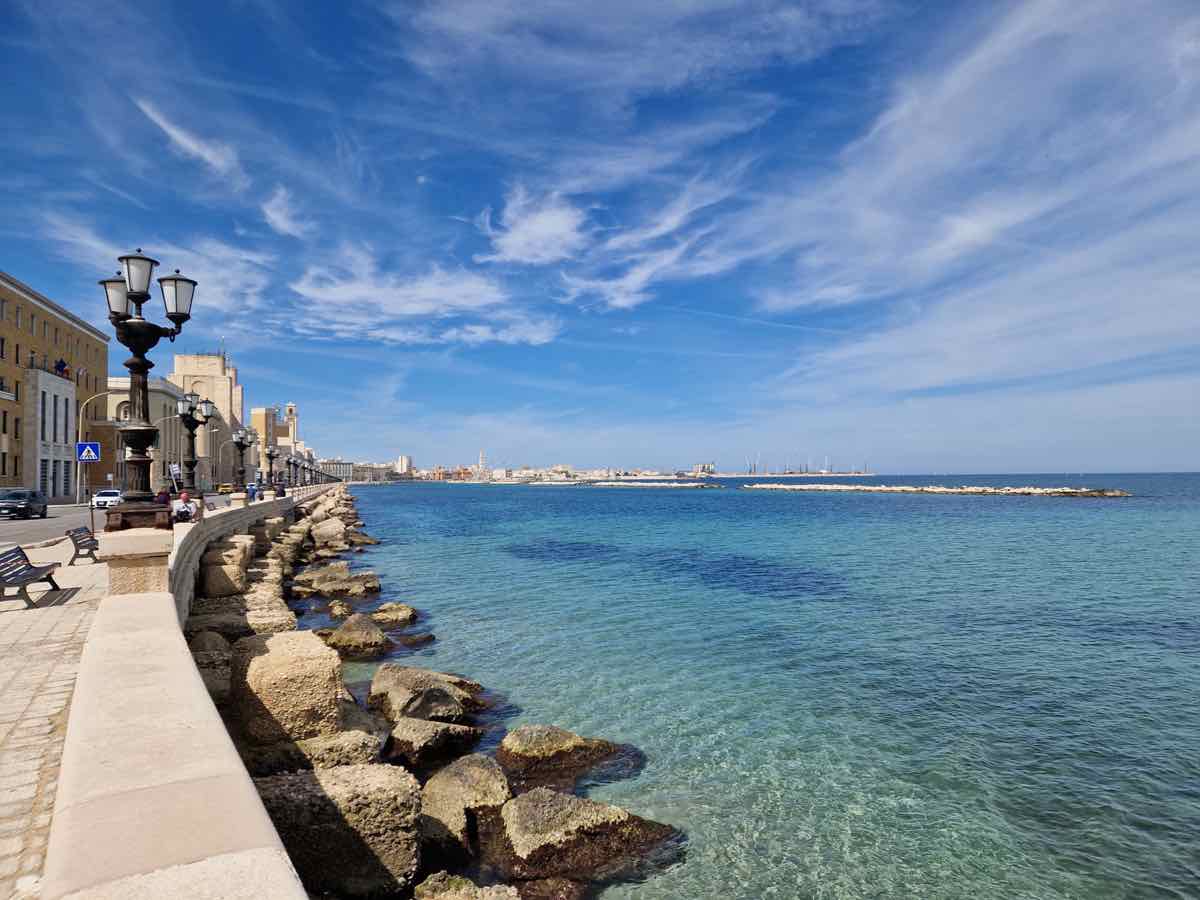
Opened in 1927, Lungomare Nazario Sauro is one of Bari's most famous promenades, stretching from Piazza Diaz to Lungomare Perotti with a stunning view of the Adriatic. In a single glance you can admire the magnificent late Art Nouveau buildings facing it — among the best known the Palazzo della Provincia, the Albergo delle Nazioni and the Teatro Margherita, whose architecture creates striking plays of light and shadow.

Not far from Teatro Margherita is the fish market the locals call N'derr alla lanz — literally “at the foot of the boats” — where fishermen returning from the sea moored their wooden boats to sell fish straight from their 'gozzi'. The seafront is one of the most beautiful in Italy, made even more charming by its street lamps and benches facing the sea.

The shopping street: Via Sparano
ShoppingWalks

The shopping street: Via Sparano

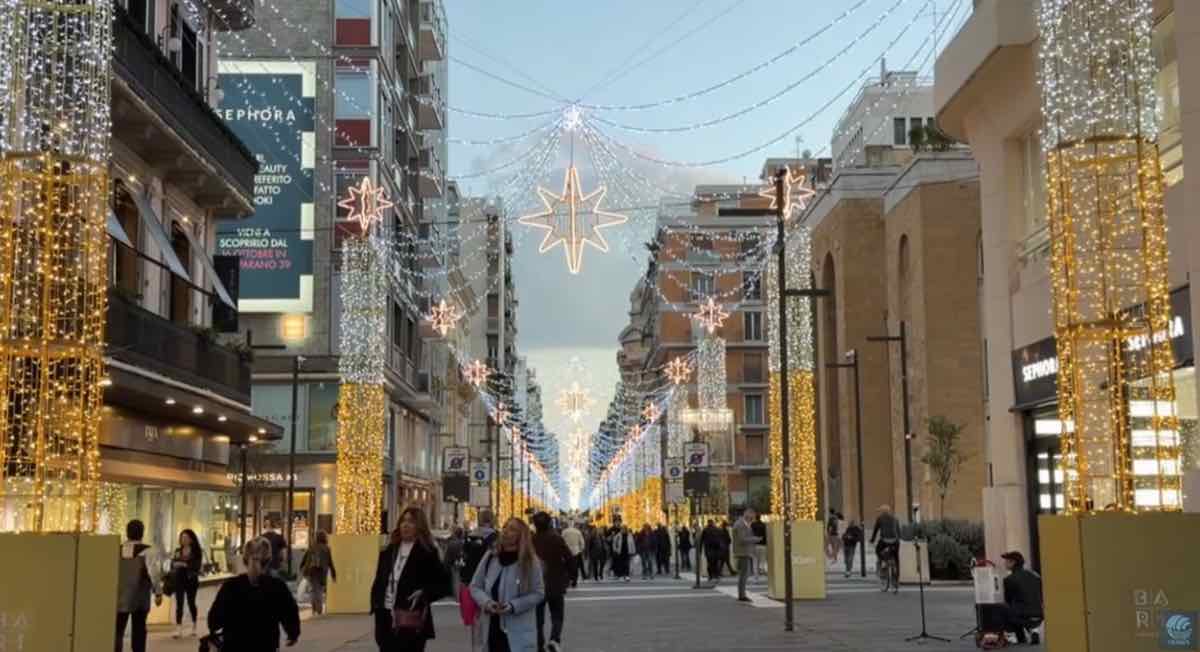
Welcome to Bari's 'living room', the most famous central street and a favourite of shopping lovers. Via Sparano is the main artery of the city centre: a pedestrian street over half a kilometre long that runs from near the old town to the central railway station in Piazza Aldo Moro.

It is called the “living room of Bari” for a reason: since the renovation completed in 2018 the street looks even more elegant, with 7 'salotti' (lounges), each with its own name and character — Porta Vecchia, Fashion, Worship, Liberty, Literary, Piazza Umberto and finally Music.

Besides Palazzo Mincuzzi, the symbol of shopping on Via Sparano, the street is lined with shops that attract locals and visitors every day: on your stroll you will find prestigious international fashion brands as well as historic shops that have made their mark on Via Sparano.

Esc